

Categories
Business Finance General Technology

Choosing the wrong ERP can ruin your business: 3 mistakes that cost millions

Is your company about to implement an ERP? Avoid these costly mistakes.

Adopting an ERP can transform your company or become one of its biggest financial failures. According to a study by Panorama Consulting Solutions (2023), 52% of ERP implementations exceed the projected budget, and 60% fail to achieve all the expected benefits. The reason: poor system selection, inadequate planning, and a lack of understanding of the true needs of the business.

What is an ERP and what is it used for?

An ERP (Enterprise Resource Planning) is a comprehensive system that centralizes the management of all areas of a company: finance, purchasing, sales, inventory, production, HR, etc. Far from being just “accounting software,” the ERP acts as the nervous system of the organization, allowing each department to work in a synchronized manner.

What is an ERP used for?

Automate processes
Eliminate data duplication
Make real-time decisions
Facilitate audits and tax compliance
Scale operations without losing control

In Mexico, the need for ERP systems has increased due to the requirements of the SAT (CFDI 4.0, REPSE, electronic accounting), making it urgent to have a platform that guarantees regulatory compliance and operational efficiency.

Mistake 1: Choosing the cheapest ERP (and not the most suitable)

Many companies select an ERP based on cost, without evaluating whether it truly covers their specific processes. This generates high hidden costs in customizations, additional consulting, or even switching ERPs after just a few years.

Key fact: According to Software Advice, 74% of SMEs change their ERP system between 3 and 5 years after their initial implementation due to errors in the initial selection.

How to avoid it?

Define specific objectives (automation, control, compliance).
Evaluate functionalities aligned with actual processes. Demand demos tailored to your business.

Mistake 2: Not diagnosing processes before searching for software

Implementing an ERP without understanding how your company operates is like buying a prosthesis without a proper diagnosis. This common mistake leads to forced implementations, employee resistance, and a platform that doesn’t address the real bottlenecks.

Typical example: A company with manual and fragmented processes implements an ERP without redefining its purchasing flow. The result: operational chaos and distrust in the tool.

How to avoid it?

Map all processes before selecting an ERP.

Identify points of friction, duplication, and automation opportunities.

Prioritize the most critical modules.

Mistake 3: Ignoring team training and adoption

One of the biggest mistakes is assuming that staff will “learn as they go.” The lack of support and structured training leads to the ERP being underutilized or poorly leveraged.

According to Deloitte, 70% of ERP project failures are related to change management.

How to avoid it?

Establish an adoption plan from the outset.
Provide training by role and phase, using real-world examples.
Have change ambassadors in each area.

How does Smart Consultoría help you avoid these mistakes?

Smart doesn’t sell ERPs. Smart analyzes your business to help you choose the right ERP, based on an in-depth diagnosis of your processes, constraints, and objectives. Its methodology is based on:

Preliminary operational and strategic evaluation.
Objective comparison of the leading ERPs in Mexico.
Partnerships with vendors to obtain realistic pricing and terms.
Support during evaluation, testing, and deployment.

Having a neutral and specialized consultant can save you millions in errors.

Is your company about to implement an ERP? Request a free evaluation with Smart and avoid mistakes that could cost you millions.

Click here to schedule your diagnosis:
https://smartconsultoria.mx/en/solutions/

Categories
Family businesses Finance

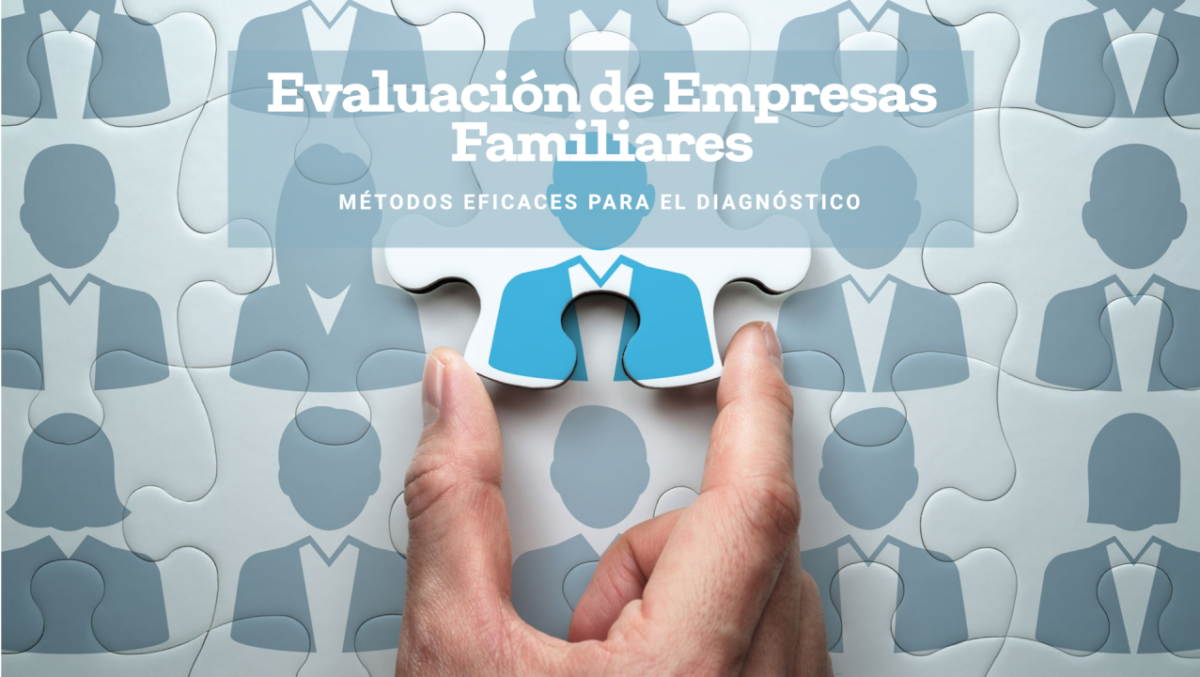
Diagnosing a Family Business in Trouble: Effective Methods for its Evaluation

Family businesses play a crucial role in the global economy, but they often face unique challenges due to the combination of personal relationships and business responsibilities. If you own a family business and are experiencing difficulties, it is essential to apply a proper diagnosis to identify the underlying causes and design effective solution strategies. Below are the most appropriate ways to diagnose a family business in crisis.

1. Corporate Governance Analysis

One of the first steps in the diagnosis is to assess the corporate governance structure. It is key to determine whether there are clear rules regarding decision-making, the distribution of responsibilities and succession. In many cases, the lack of established rules can generate internal conflicts that affect the stability of the company.

2. Internal Communication Assessment

Communication is a critical factor in family businesses. Problems such as lack of transparency, misunderstandings and unresolved conflicts can lead to a tense and ineffective work environment. To assess this aspect, surveys, interviews and observations of family and work meetings can be used.

3. Financial and Operational Analysis

An effective diagnosis should include a detailed assessment of the company’s financial situation. This involves reviewing financial statements, cash flows, profitability and debt levels. In addition, operational efficiency should be analysed to identify possible inefficiencies in production, distribution or resource management.

4. Review of the Strategic Plan

Many family businesses lack a clear long-term strategy. Evaluating whether the company has a defined, up-to-date strategic plan aligned with the family’s vision is essential. It is also necessary to analyze whether there is adequate succession planning to avoid crises in the future.

5. Diagnosis of the Organizational Climate

The work environment within the company can significantly influence its performance. Using tools such as work environment surveys and employee interviews will allow you to measure the level of commitment, motivation and satisfaction of employees, including both family members and external employees.

6. Analysis of the External Environment

Market conditions, competition and changes in the economy can have a negative impact on a company. It is necessary to evaluate the company’s positioning in its sector, as well as its ability to adapt to new trends and technologies.

Conclusion

The diagnosis of a family business must be comprehensive and consider both internal and external factors. Applying structured analysis tools will allow problems to be identified more accurately and strategies to be designed to ensure the continuity and growth of the business.

If you wish to receive personalized advice to improve the management of your family business and overcome current challenges, you can contact us .

Author : Smart Consulting.

Human development

Design of policies and procedures manuals

Strategic planning

Corporate governance

Design of the commercial process of your company

Tax audits

Franchise Search

ERP evaluation

Franchise marketing

Creation of your business plan

We create your franchise system

Information received.

We will contact you shortly.

Desarrollo humano

Gobierno Corporativo

Información recibida.

Te contactaremos a la brevedad.

Planeación estratégica

Diseño de manuales de políticas y procedimientos

Marketing 360°

Auditorías fiscales

Búsqueda de franquicias

Evaluación de ERP

Comercialización de franquicias

Diseño de procesos comerciales

Creación de tu plan de negocio

Creamos tu sistema de franquicias